Format is one of the first decisions in any corporate event, yet it’s often made out of habit rather than strategy. Companies default to in-person because that’s what they’ve always done, or lean virtual purely to save on logistics, without really asking which format actually serves the event’s purpose.
The right choice depends less on preference and more on what the event is meant to achieve, who needs to attend, and how much budget and coordination capacity is realistically available. This article breaks down how to think through that decision clearly.
What’s the Real Difference Between In-Person, Hybrid, and Virtual Events?
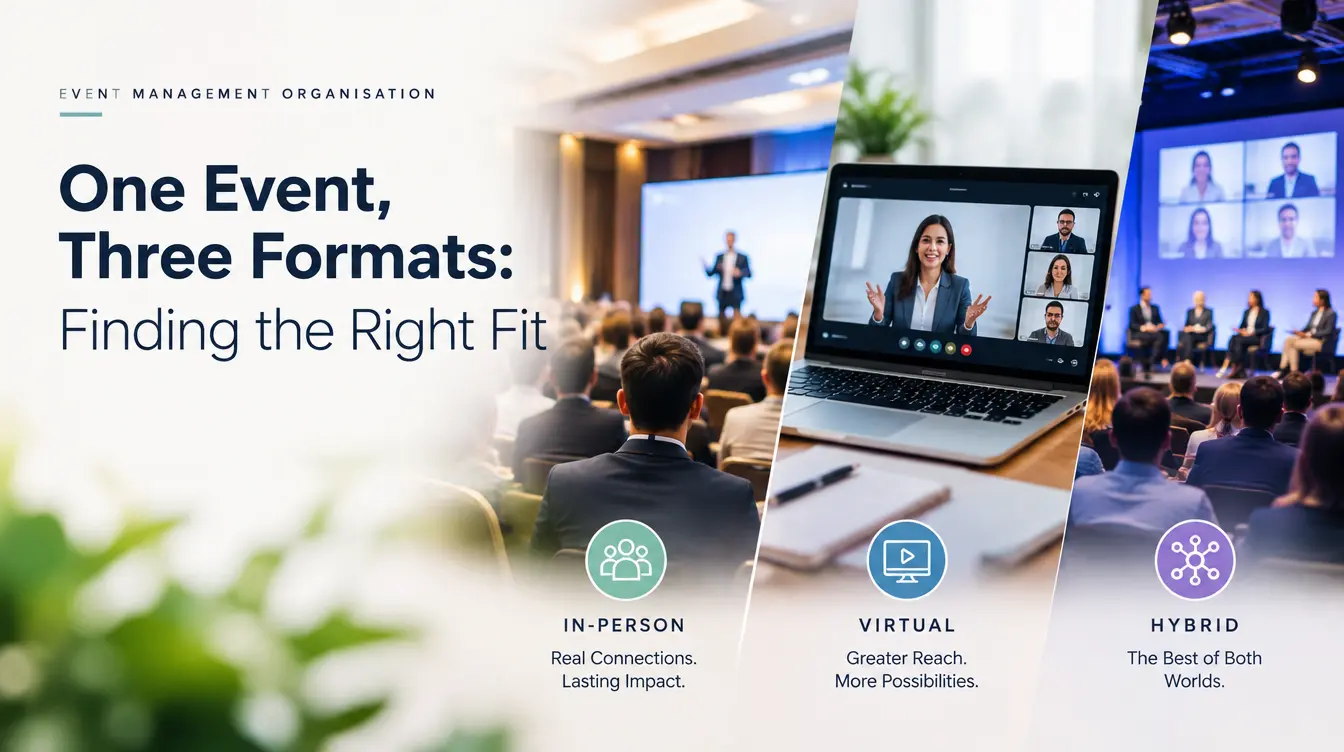
An in-person event brings everyone together physically at a single venue, relying on face-to-face interaction to drive engagement and connection. A virtual event happens entirely online, with attendees joining remotely through a digital platform. A hybrid event combines both, giving some participants an in-room experience while others join virtually, often through live streaming or interactive digital components.
Each format serves a different purpose, and none is inherently superior. The right fit depends entirely on what the event needs to accomplish.
When Does an In-Person Event Make the Most Sense?
In-person events work best when physical presence genuinely adds value to the experience. Team-building activities, leadership offsites, and milestone celebrations like Annual Day tend to lose much of their impact when moved online, since so much of their value comes from shared physical space and spontaneous interaction.
In-person formats also suit situations where networking and relationship-building are central to the event’s purpose, such as client appreciation events or incentive trips designed to reward and motivate top performers.
When Is a Virtual Event the Better Choice?
Virtual events make sense when geographic reach matters more than physical presence. A company with employees spread across multiple cities, or one hosting a large-scale training session or webinar, often benefits from a format that removes travel entirely.
Virtual formats also work well for shorter, information-focused sessions where the primary goal is clear communication rather than deep relationship-building. Budget-conscious teams often choose this format when the event’s purpose doesn’t strictly require in-person interaction.
What Makes Hybrid Events Worth Considering?
Hybrid events bridge the gap when a company wants the depth of an in-person experience without excluding people who can’t travel or attend physically. This makes hybrid formats particularly useful for large conferences, product launches, or company-wide town halls where leadership wants maximum participation without forcing every attendee into the same physical room.
Corporate hybrid events in Bangalore are increasingly common among companies with distributed teams across the city and beyond, where getting everyone to one venue isn’t always practical, but the occasion still calls for a genuine shared experience.
What Are the Biggest Challenges With Virtual and Hybrid Formats?
Virtual events in Bangalore and elsewhere often struggle with engagement. It’s far easier for attendees to disengage when they’re behind a screen, multitasking, or simply logged in passively without real participation.
Hybrid events carry an additional challenge: keeping the in-room and online experiences balanced. Without careful planning, virtual attendees often end up feeling like an afterthought, watching a stream designed primarily for the people physically present rather than genuinely included in the event.
Overcoming these challenges requires deliberate production choices, not just a camera pointed at the stage.
How Do You Decide Which Format Fits Your Event?
A few practical questions help narrow down the right choice:
- What is the primary goal of the event — connection, information sharing, recognition, or motivation?
- How geographically spread out is your audience, and how important is their physical presence?
- What’s the realistic budget, and how does that budget compare across formats once travel, venue, and production costs are factored in?
- Does the content and format of the event genuinely benefit from in-person energy, or would a well-produced virtual experience achieve the same outcome?
Answering these honestly, rather than defaulting to whatever format was used last year, usually leads to a more effective event.
How Does an Event Management Agency Help With Format Decisions?
A good event management agency doesn’t just execute whichever format a client requests. They help evaluate the actual goals behind the event and recommend the format, or combination of formats, that genuinely serves those goals.
This matters because the production requirements, budget allocation, and planning timeline differ significantly across formats. A partner experienced across all three can guide that decision early, rather than letting a company commit to a format that doesn’t fit the event’s real purpose.
Working with an established event management agency in Bangalore also means access to the technical production expertise that hybrid and virtual formats specifically require, which many internal teams don’t have readily available.
What Should You Look for in a Hybrid Event Partner?
Hybrid events require a particular skill set that not every event organiser has developed. When evaluating a partner for a hybrid format, look for experience managing live streaming quality, interactive tools that genuinely engage remote attendees, and a production team capable of balancing both audiences simultaneously rather than treating the virtual stream as secondary.
It also helps to ask how a potential partner handles technical contingencies, since connectivity issues or platform glitches tend to be far more disruptive for a hybrid event than for a purely in-person one. A partner who can speak clearly about their backup plans for these scenarios is usually one who has handled them before.
Bigbee Experience Management’s hybrid events in Bangalore are designed around this balance, ensuring that whichever format your event takes, the experience feels intentional rather than improvised.
Bringing It Together
There’s no universally correct event format. The right choice depends on your event’s purpose, your audience’s location, and your available budget, weighed honestly rather than defaulted to habit. In-person formats build connection, virtual formats extend reach, and hybrid formats try to capture both, provided they’re executed with genuine care for both audiences.
If you’re weighing which format fits your next corporate event, Bigbee Experience Management’s team can help you think it through and plan accordingly. Reach out to discuss your event’s goals, and we’ll help you choose the format that actually serves them.