A product launch gets one real chance at a first impression. The people in the room, whether customers, partners, press, or investors, form an opinion within minutes, and that opinion tends to stick. Yet many launches are planned in a rush, with the product team focused on the product and the event treated as an afterthought.
A well-run launch needs the same discipline as the product itself. This guide walks through the planning process in the order it usually unfolds, so marketing heads, founders, and brand managers know what to settle at each stage.
What Should You Define Before Planning Anything Else?
Start with the objective. A launch meant to generate media coverage looks very different from one designed to close deals with enterprise buyers or excite existing customers.
Write down what success looks like in plain terms. It might be qualified leads, press mentions, distributor sign-ups, or social buzz. Every later decision, from venue to guest list, should trace back to that goal.
Next, define the audience clearly. Invite lists built around “everyone who might be interested” usually produce half-empty rooms and unfocused conversations.
How Do You Set a Realistic Budget and Timeline?
Budget conversations are easier when they begin with priorities rather than totals. Decide what the launch cannot succeed without, such as a live product demonstration or strong production quality, and fund those elements first.
Timeline matters just as much. Work backwards from the launch date and leave generous buffers for approvals, vendor confirmations, and creative revisions. Most launch problems trace back to compressed timelines rather than poor ideas.
Many companies planning Product Launch Events in Bangalore also factor in local considerations early, such as peak-season venue demand and traffic patterns that affect guest arrival times.
How Do You Choose the Right Concept and Format?
Concept is the creative thread that ties the whole event together. It should reflect the product’s personality and the audience’s expectations. A fintech product launch for senior executives calls for a very different tone than a consumer lifestyle product aimed at younger buyers.
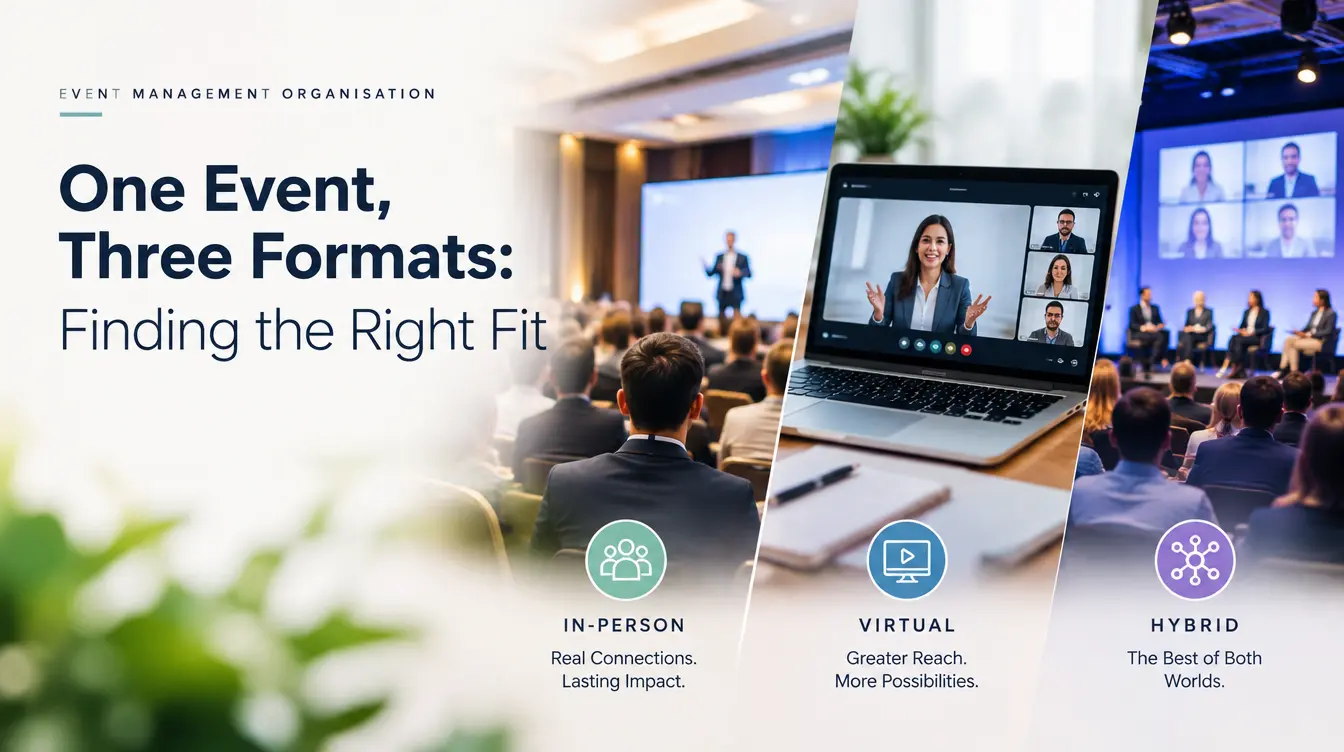
Format follows from the concept. Some launches suit an intimate, invitation-only reveal. Others need a larger showcase with demonstration zones, or a hybrid format that extends reach beyond the room. Choosing a format that fits the goal matters more than choosing the most elaborate one.
What Makes a Venue Right for a Product Launch?
The venue shapes the first thirty seconds of every guest’s experience, so it deserves careful evaluation. Look beyond appearance and check:
- Whether the layout supports your planned flow, including stage, demonstration areas, and networking space.
- Whether sound, lighting, and connectivity can handle live demos without hiccups.
- How easily guests can reach it, including parking and transport access.
- Whether the venue’s own rules on décor, vendors, and timing leave room for your branding.
Walk the space in person before committing. Photographs rarely reveal acoustics, pillars blocking sightlines, or awkward loading access.
How Do Brand Activations Strengthen a Launch?
A launch becomes memorable when guests do more than watch. Brand activations give attendees a reason to interact with the product and the brand directly, which turns passive observers into participants.
These can include hands-on demonstration zones, interactive installations, sampling experiences, or branded photo moments that guests naturally share online. The best ones feel connected to the product’s actual benefit rather than added for decoration.
Activations also give your team natural conversation starters, which makes follow-up easier and more relevant afterwards.
What Role Do Exhibition Stalls and Display Setups Play?
For launches tied to trade shows, expos, or multi-brand showcases, the physical presence of your brand decides whether visitors stop or walk past. Well-designed Bangalore exhibition stalls balance visual impact with practical function, giving visitors space to engage while giving your team room to hold meaningful conversations.
Good stall design considers traffic flow, lighting, product placement, and brand messaging as a single system. Dependable stall setup services in Bangalore also handle fabrication, installation, and dismantling on tight schedules, which removes a significant logistical burden from the marketing team during an already busy period.
How Should You Plan the Programme and Run of Show?
The programme is the sequence of moments guests experience, from arrival through the reveal to the closing conversations. Keep it tight. Attention drops quickly when presentations run long or transitions drag.
A detailed run of show, documenting every cue, speaker, and technical requirement, keeps everyone aligned. Rehearse it fully, including the awkward transitions, with the actual technical setup. Rehearsals catch problems that look invisible on paper.
What Should Your Promotion and Guest Communication Look Like?
Great events still fail when the right people do not show up. Begin invitations early, personalise them where possible, and follow up with clear details on timing, location, and what guests can expect.
Alongside direct invitations, consider building anticipation through teasers on the channels your audience actually uses. Keep messaging consistent so that the invitation, the venue branding, and the on-stage story all feel like one coherent experience.
How Do You Manage Execution on the Day?
On the day, a dedicated team should own every function: guest registration, technical cues, hospitality, and troubleshooting. Define clearly who decides what, so nobody waits for approvals during live moments.
Build contingency plans for the likely issues, including late speakers, technical failures, and unexpected guest numbers. A calm response to a small problem is invisible to guests, which is exactly the goal.
What Happens After the Launch?
The event does not end when guests leave. Follow up promptly with thank-you messages, relevant content, and next steps for interested prospects, while the experience is still fresh.
Then review what worked. Compare outcomes against the objective you set at the start, gather feedback from attendees and the internal team, and document lessons for the next launch. This closing step is what turns a single event into a repeatable capability.
Should You Plan the Launch In-House or With a Partner?
Teams with strong event experience and spare capacity can manage smaller launches internally. For larger or high-stakes launches, working with experienced event organisers in Bangalore brings vendor relationships, production expertise, and the calm that comes from having handled similar situations before.
Companies launching across Karnataka, Hyderabad, and Chennai often benefit most, since coordinating multiple venues and teams is where internal bandwidth tends to run out.
Bringing It Together
A successful product launch comes from clear objectives, careful sequencing, and disciplined execution. Each step above builds on the last, and skipping one usually shows up as a visible gap on the day.
If you are planning a launch and want a partner to handle concept, production, and on-ground delivery, Bigbee Experience Management can help. Reach out to discuss your product, your audience, and your timeline, and we will help you shape a launch that makes the impression it deserves.